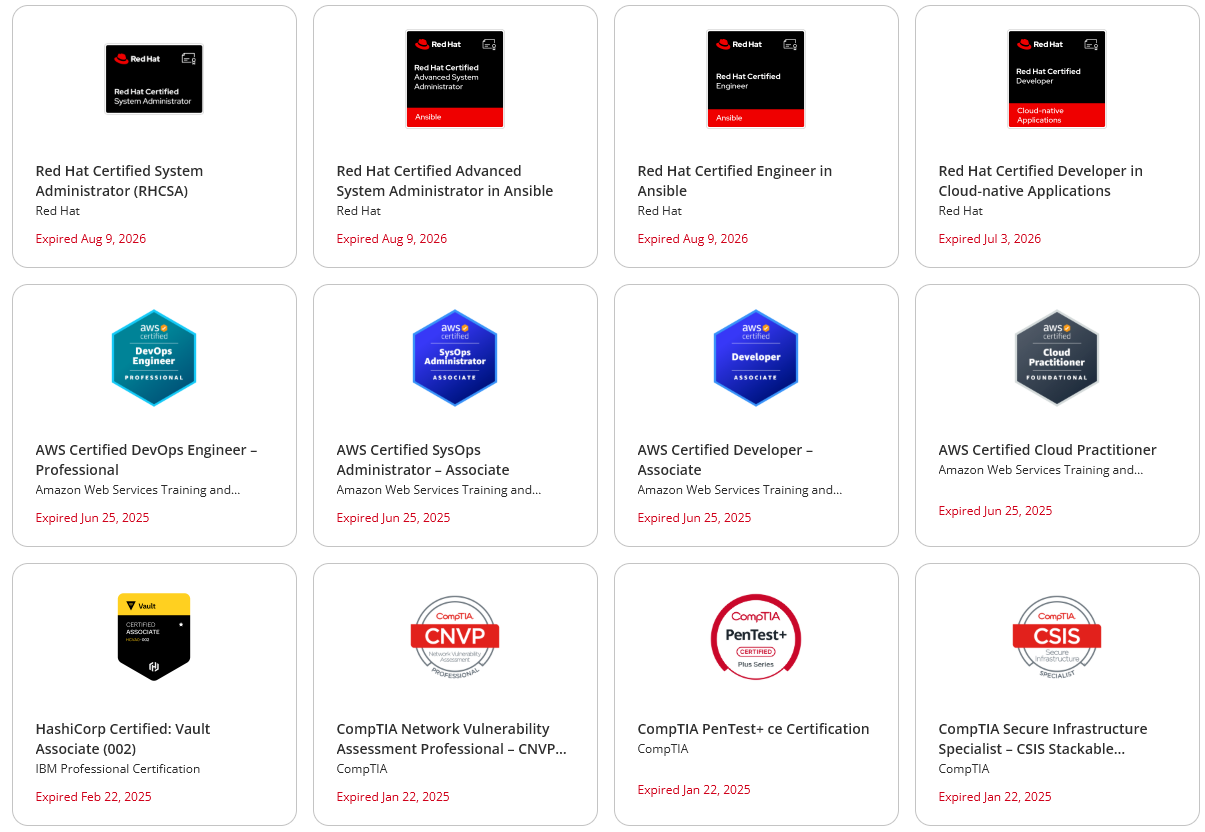
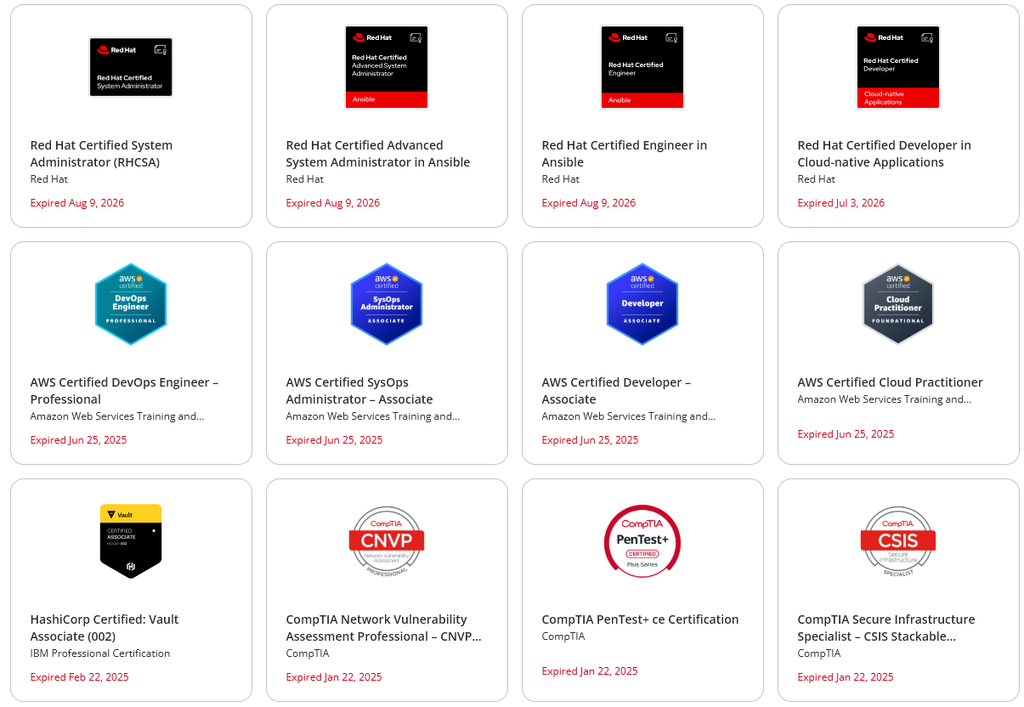
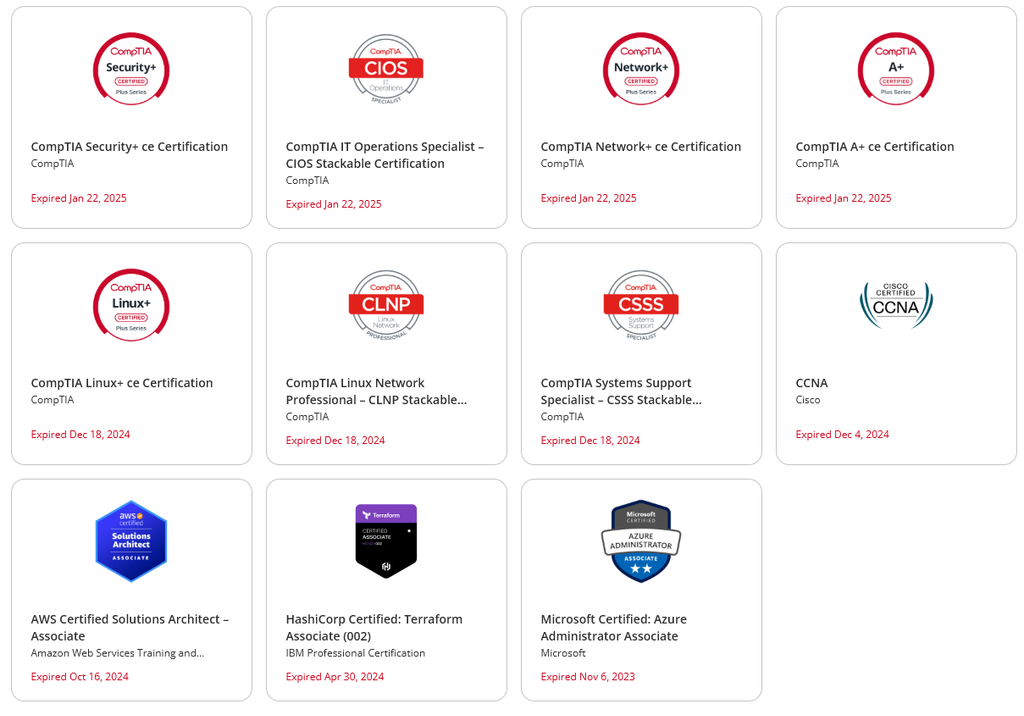
If you scroll through a snapshot of my professional background, you will see a familiar digital badge collection: AWS Professional and Associate certs, multiple Red Hat credentials, Cisco CCNA, HashiCorp, and a wall of CompTIA badges. For a long time, collecting these was a deliberate strategy. But after accumulating dozens of them, I stopped.

Here is why I walked away from the certification treadmill.
Stepping Stones to Hands-On Labs
Originally, I used certifications as structural stepping stones. When I wanted to dive into a new technology, staring at a blank documentation page can feel aimless. Studying for a cert gave me a structured curriculum. I treated the syllabus as a framework for hands-on learning—a way to force myself into labs, test configurations, and break things safely in a sandbox environment.
The Illusion of the “Knighting” Badge
At the time, I also viewed certifications as a form of validation. Earning one felt like being knighted by the company whose technology I was learning. It was a stamp of approval from AWS, Red Hat, or Cisco saying, “Yes, you understand our ecosystem.”
But over time, the romance faded. I realized that the true knowledge and understanding I sought would never come from getting certifications. While they can be a decent introductory vehicle to learn about a technology, certifications ultimately test test-taking strategies and rote memorization of vendor quirks.
Building to Solve Real Problems
True mastery doesn’t come from a PDF certificate. Building projects—especially ones that aim to solve an identified, real-world problem—has proven to be the best way to learn anything. When you are architecting a backend service, spinning up infrastructure to serve actual users, or debugging a live failure, you learn more in a single afternoon of building than you ever would passing a multiple-choice exam.
The Post-COVID Market Shift
This realization about practical experience collided with a major shift in the tech landscape. After COVID-19, waves of layoffs flooded the job market with seasoned, highly experienced workers.
In that kind of environment, the value proposition of digital badges changes entirely. When thousands of engineers with years of production experience are looking for work, a certificate loses its edge. Employers facing economic tightening began valuing proven, real-world execution and demonstrable systems over badge counts.
The Rule I Live By Now
Today, my stance is simple: I only pursue a certification if it is explicitly required by an employer who is willing to fully invest the time and cost into it.
If a company values a specific vendor credential and wants to pay for the exam voucher while carving out work hours to study, that is a different equation. But spending my own weekends, late nights, and personal capital chasing badges to prove competence? I’m done with it.
Real engineering is proven by the systems you build, the code you ship, and the problems you solve when things break.